
Questions
The questions people actually ask.
Twelve of them, answered in the order they usually come up.
Good questions.
Still curious? Call (800) 797-5880 or read our 16 free articles on ice dams and gutters.
How does Heater Cap work?
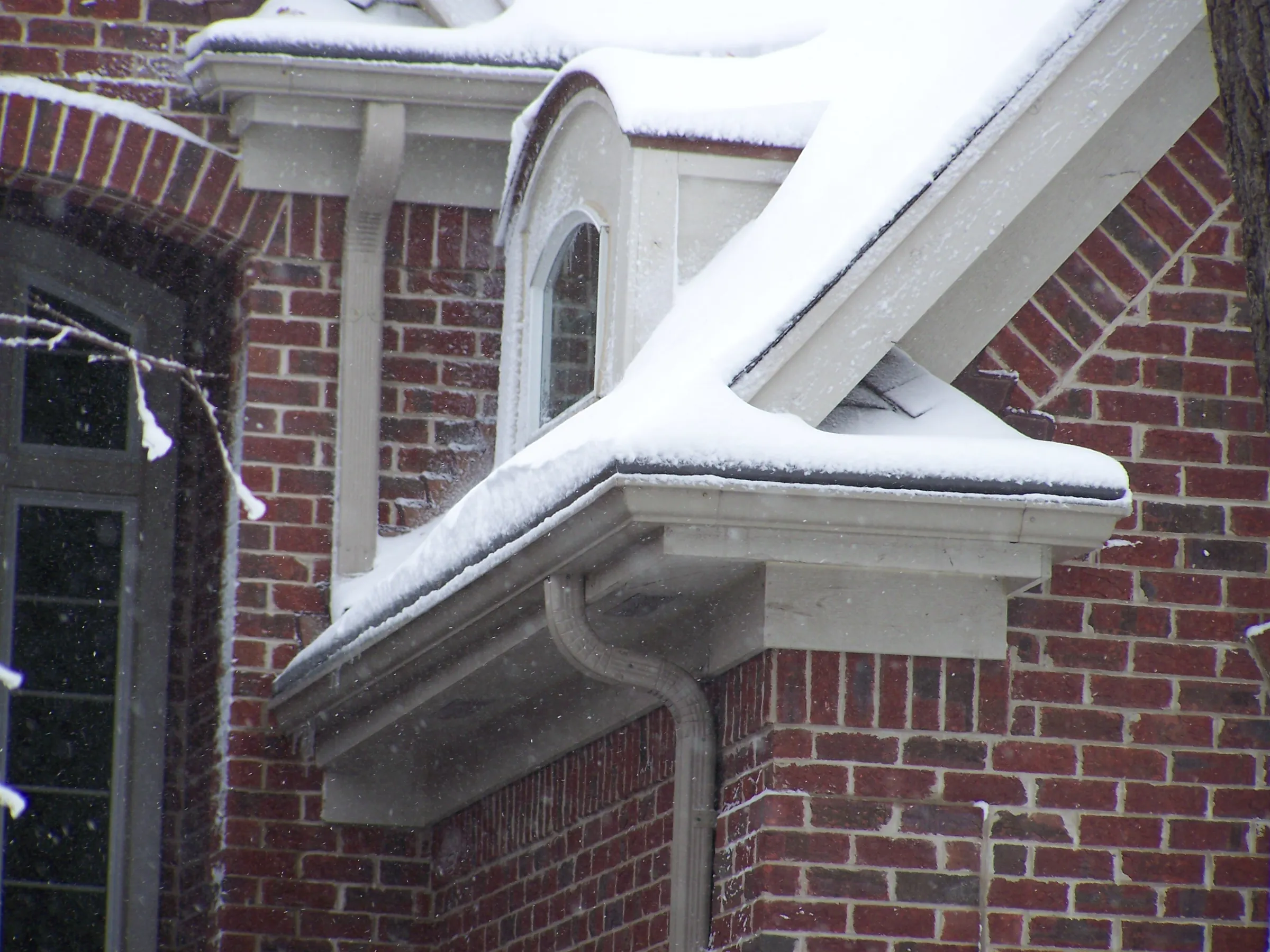
Heater Cap gently heats the ice and snow coming off your roof, using heat dispersing panels together with self regulating heating cable. The panels melt the ice and snow, and a relay of heating cables keeps the water melted and flowing through the gutters and down spouts.
It is hardwired into its own circuit breaker so it can be turned on and off when needed, or, for jobs under 100 feet, plugged into a dedicated GFI outlet. It can be installed on the roof, in the gutters and down spouts, or on top of gutter guards. In some cases it can be applied to underground draining systems.
Why should I choose Heater Cap over other ice melting products?
Heater Cap melts a larger area of ice and snow than heat tapes and wires do, and it is safer: the self regulating heat cable does not get hot enough to start a fire, it is properly grounded to avoid sparking, and it is hard wired into the home.
It is also far less visible than the zigzag configuration of heat wires and tapes, so you do not lose any curb appeal.
How much will it cost to install Heater Cap on my home?
The expense is determined by the amount of footage. Usually only the walkways are treated.
The cable has to travel up roof valleys, over gutter covers if they are present, along the gutters, down the down spouts and into drain tiles if there are any. There is a separate expense for the electrical hook up to the circuit breaker.
Can I just have a plug-in arrangement?
Heater Cap is hard wired into its own circuit breaker, on a separate circuit, for larger jobs.
For jobs under 100 feet, it can be plugged into a dedicated GFI outlet instead.
How does Heater Cap melt the snow and ice coming down the roof valleys?
Roof valleys need a proactive stance, so the cable and panels are doubled up and mounted in them.
A valley is where two or more sections of roof join, and it funnels everything above it into one path. Without doubling up, that amount of ice and snow would overwhelm the system.
When should I turn Heater Cap on?
Turn the switch on at the circuit breaker when the outside temperature falls to between 30 and 35 degrees, and turn it off in March or April once the snow has melted and temperatures stay above 35 degrees.
Energizing the system at low temperatures may cause the breaker to trip, and it may trip several times until the heating cable is fully heated.
I forgot to turn it on when the weather dropped below 35 degrees. What do I do now?
Turn the system on as soon as you remember. If you can, wait for a day when the temperature is above freezing, then turn it on and leave it on for the rest of the season.
If snow has already accumulated on the house, turn the system on and watch your breaker box. Depending on the length of the wire and the temperature, the breaker may trip when you turn it on. If it trips, turn it back on. If it trips again, turn it back on. If it trips a fourth time, wait ten minutes and start again. Once it is running, keep an eye on the breaker while the system reaches its optimal heat.
The system may take several days to heat properly and catch up with the snow built up on your home. Repeated low temperature starts will shorten its life.
Would it save money to switch the system on and off around each storm?
No, it costs more. Heating the wire and panel from below freezing takes far more power than keeping them going when temperatures are above freezing.
That extra demand is also what trips the breaker, and it may keep tripping until the cable reaches its proper temperature. Turning the system on repeatedly in below freezing weather over a winter ends up costing more rather than saving, the system can take days to catch up with the snow on the house, and you would need to keep watching for tripped breakers.
Repeated low temperature starts will shorten the life of your Heater Cap system.
Can the wire be spliced?
We do not recommend it. Splicing the wire voids the warranty.
It also creates a weakened weather barrier, which increases the chance of water getting in and ruining the wire.
What warranty comes with Heater Cap?
A lifetime material warranty on the Heater Cap panel and a five year warranty on the self regulating heat cable.
Gutter Cap, Inc. warrants to the original consumer purchaser that the panel will be free of defects due to faulty material or workmanship for the lifetime of that purchaser, under normal use and maintenance. The heat cable is warranted free of defects due to faulty material for five years from the date of purchase, excluding the electrical work up to the cable.
The warranty is non-transferable, the system has to be installed by a licensed dealer and protected by an approved equipment protection device, and it is registered by returning the card within 30 days of installation.
Does Heater Cap come in different colors?
Yes. The heat dispersing panel comes in 12 metallic finishes and 9 roof granule finishes.
The finish is chosen to blend in with the roof valley and the gutter protection it sits on, so the system is virtually invisible from the ground.
Is Heater Cap made in the USA?
Yes. Heater Cap is made in the USA by Gutter Cap, Inc. in Naperville, Illinois.
The same company makes Gutter Cap, and runs the factory installation certification center that trains the dealer network.
Get ahead of the first freeze.
Installers book up fast once the snow starts. Reach out now.