
Why ice protection
Ice does not wait for the thaw.
Where the ice comes from, what it costs when it gets a hold, and why the usual answer makes things worse.
Ice forms at the edge.
Then it goes to work.
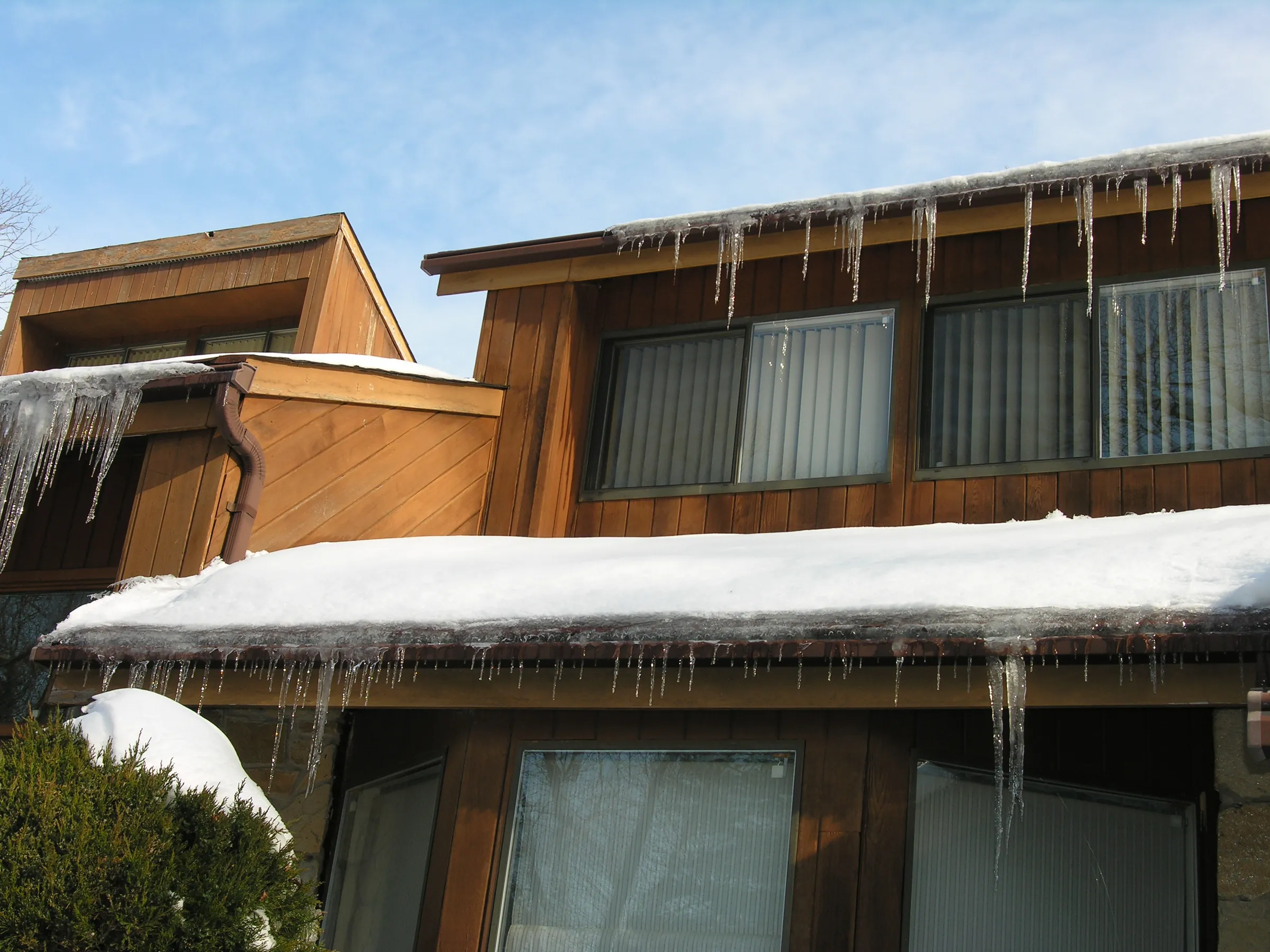
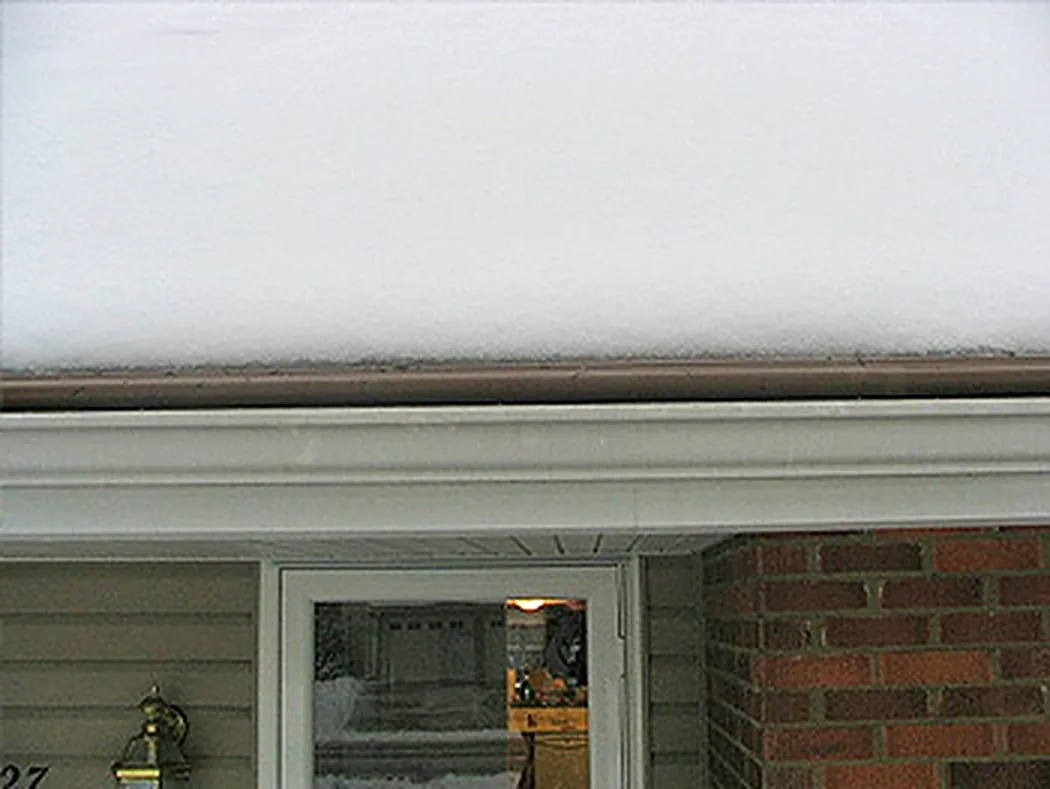
Heat escaping from the house melts the snow lying on the roof, the melt runs down to the cold edge, and it refreezes there. The gutter fills, then it overflows, and the overflow becomes icicles.
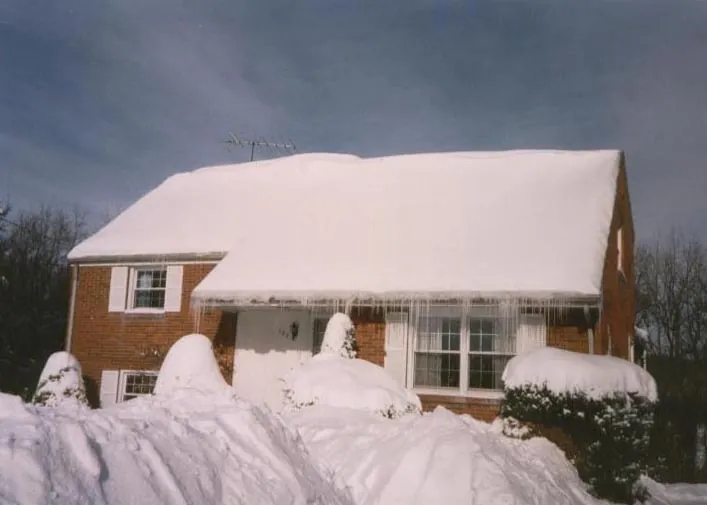
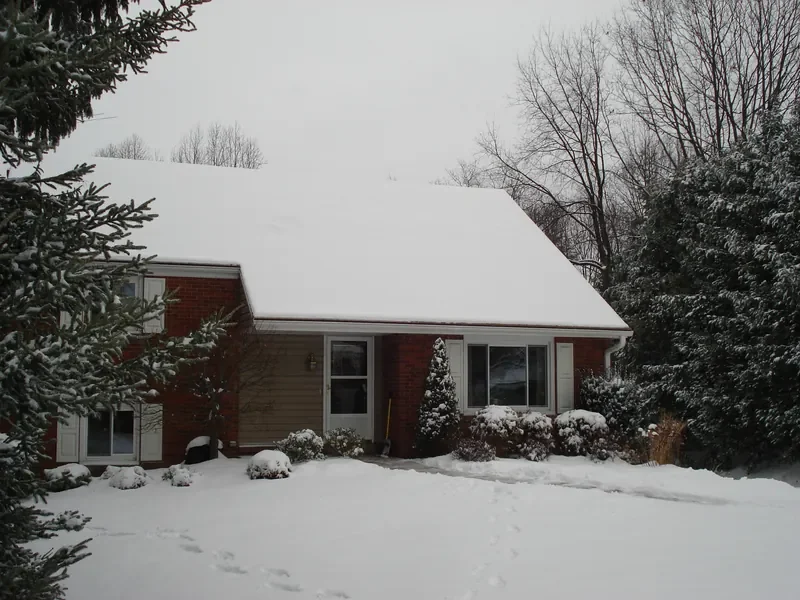
The same home, before and after Heater Cap.
- 150 lb The weight of a 10 foot gutter full of ice. Enough to tear it off the house.
- Slips Melt water refreezing on walkways is the most common ice injury, especially for older adults.
- Leaks Ice pries up the first row of shingles, letting water into the attic and ceilings.
- Rot Soaked fascia and soffits refreeze and crack, then mold and carpenter ants move in.
Where ice starts
Why does ice form on my roof?
Because the roof is warmer than the air. Snow lying on it works as insulation and holds in the heat coming up through the ceiling, so the snow against the deck melts, runs down to the cold edge beyond the heated part of the house, and refreezes there.
Vents that should be letting warm air out get covered by the same snow and stop venting, and hot air builds up around chimneys and the other structures standing proud of the roof. Every one of these is somewhere the roof runs warm:
- Bathroom fan vents
- Plumbing stacks
- Recessed canister lights
- Attic hatches
- Gable vents
- Ridge vents
- Skylights
- Attic fans
- Dormers
- Chimneys
- Insufficient attic insulation
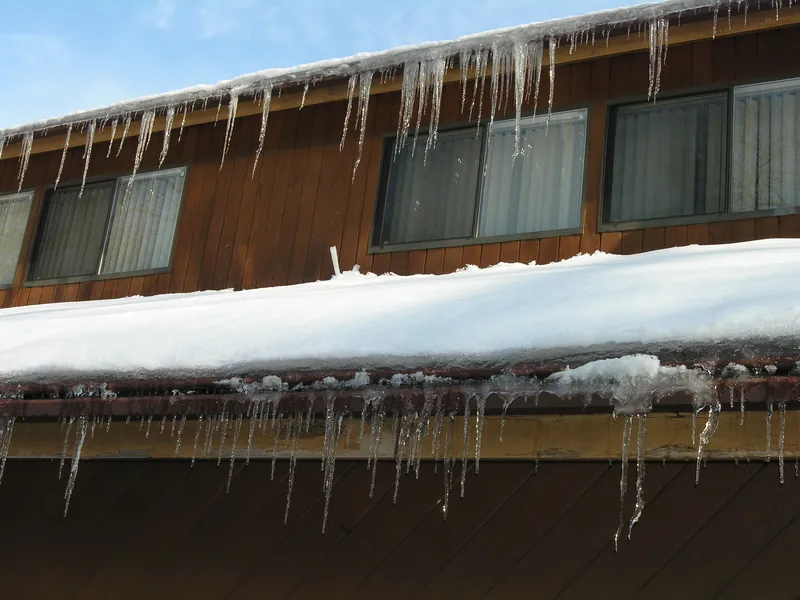
Attic heat, and a cold roof edge
If your attic is properly vented and insulated there should be no transfer of heat through the ceiling into it: the attic is a buffer between the living space and the roof.
A sparsely insulated attic without proper ventilation does the opposite, and passes that heat straight to the roof deck. Cathedral ceilings are notorious for it, because there is no buffer zone between the living space and the roof and no room for the proper depth of insulation. The heat transfer is considerable.
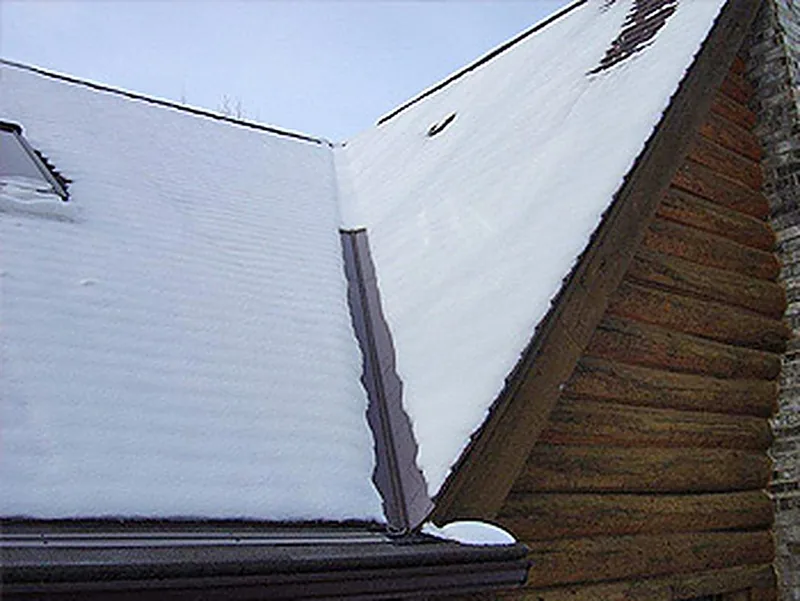
Valleys act as funnels
A roof valley, where two or more sections of roof meet, acts as a funnel.
In winter, glaciers of ice and snow cascade down it, and massive ice dams commonly form at those points. It is the reason Heater Cap doubles up the cable and the panels there rather than running a single line.
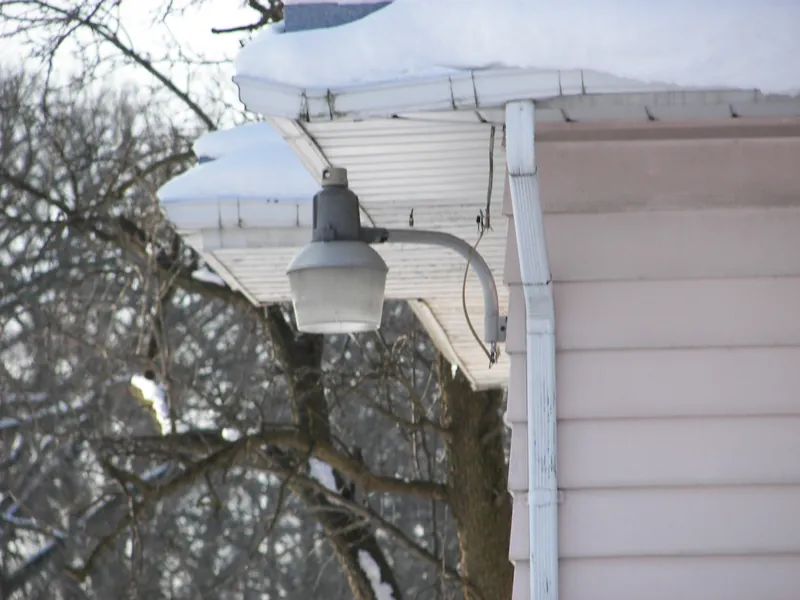
The standard down spout is too small
The standard 2x3 down spout is inadequate for a northern climate.
Ice typically blocks the bottom of the spout at the elbow, and from there the blockage works its way back up the spout and adds to the ice already in the gutters.
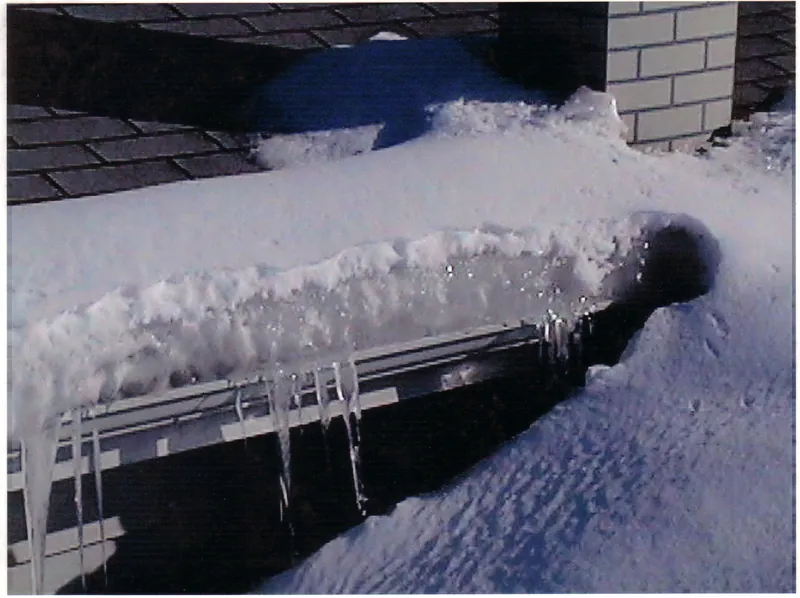
Gutter covers bring icicles sooner, not later
Mesh, sponge, bristle or dome covers all produce icicles earlier than a bare gutter does, because the ice no longer has to fill the gutter and overflow before it starts hanging.
It is common to see icicles in new parts of a house after gutter protection has been fitted. Some gutter guards claim their system inhibits ice formation. Unless the system is heated, that claim is false.
Danger and damage
What does the ice cost once it has a hold?
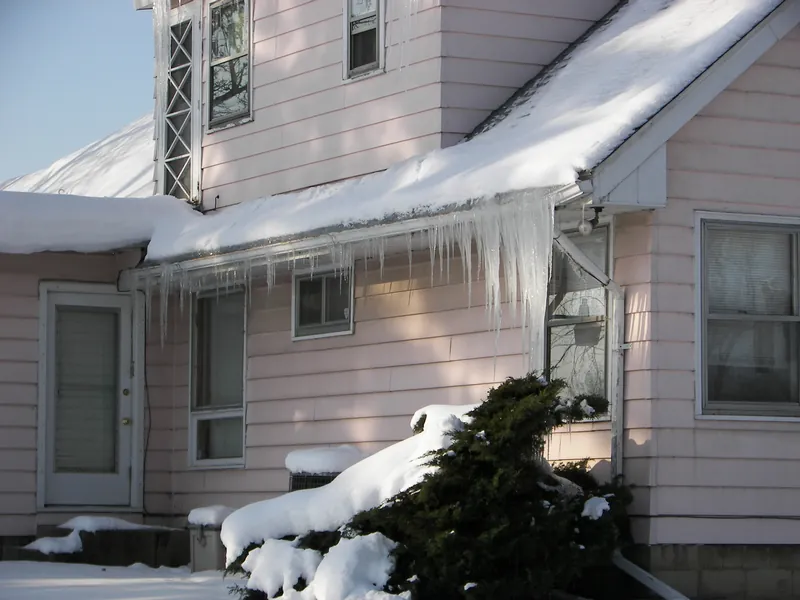
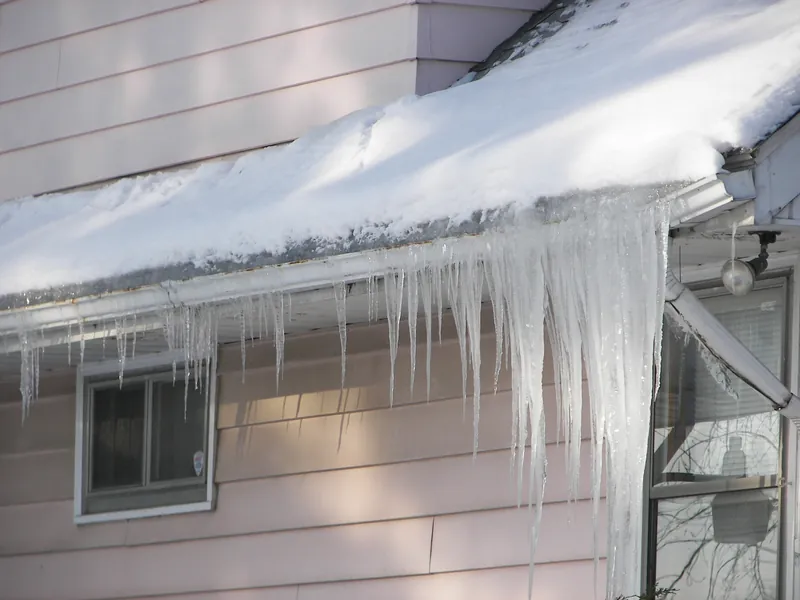
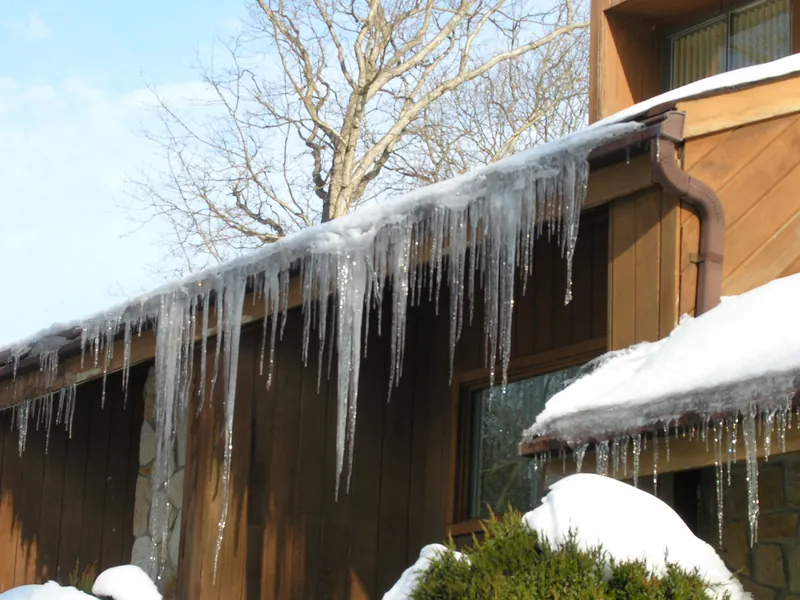
Is ice on the roof actually dangerous?
Yes, and the most common injury is not from falling ice. It is from the melt that drips onto a walkway and refreezes there.
Everyone has slipped on ice at some point. As a child it is not much; as you get older the chance of a serious injury rises sharply. An elderly person who falls may spend weeks in hospital and several thousand dollars on the bills.
Icicles have sharp points, and during a thaw it is not uncommon to find ones that have speared into the ground from the roof. Ice also forms where nobody can see it: water melts onto the soffit, builds a block a few inches thick, and eventually collapses under its own weight. Two or three inches of falling ice can do real harm.
What damage does ice do to the house?
It pries the house apart. Water gets in between vulnerable structures, freezes, expands, and forces gutters, soffit, fascia and shingles away from the building.
Roof damage from ice dams is very common. The cup shape of a gutter gives the ice an anchor to get up underneath the first row of shingles, which is the roof's first line of defense. The ice lifts and wrecks them, water works its way under and into the attic, and when it finally melts it shows up as water damage in the ceiling.
A ten foot piece of gutter filled with ice weighs around 150 pounds. That is roughly the equivalent of walking along your gutters, which nobody in their right mind would do. Water also works in between the gutter and the fascia; when it freezes it pries the gutter off the house, and the accumulated weight collapses the run.
A mid-winter thaw compounds all of it. With the gutters partly or wholly clogged, winter rain flows to the vulnerable parts of the house. Waterlogged wood refreezes, expands, separates and crumbles. In the warmer months mould and fungus break down what is left, and insects such as carpenter ants finish the job.
-
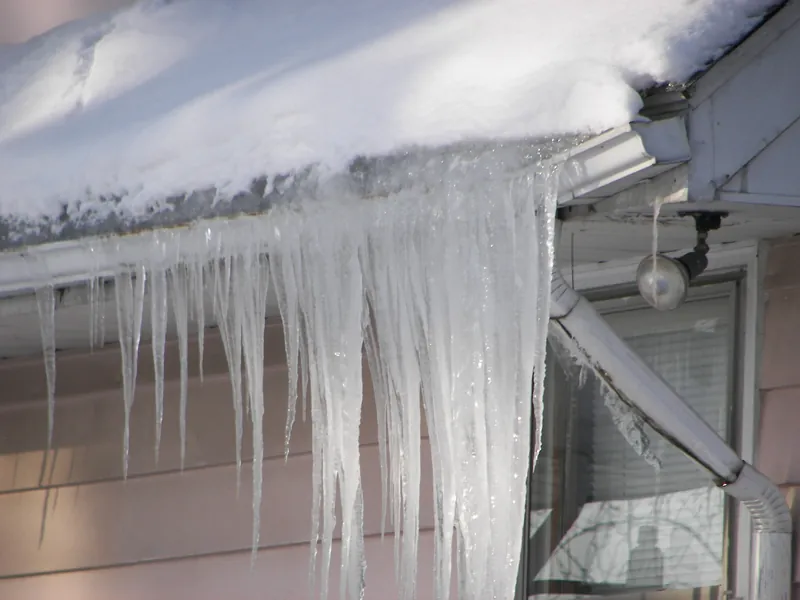
A gutter giving way under the weight.
-
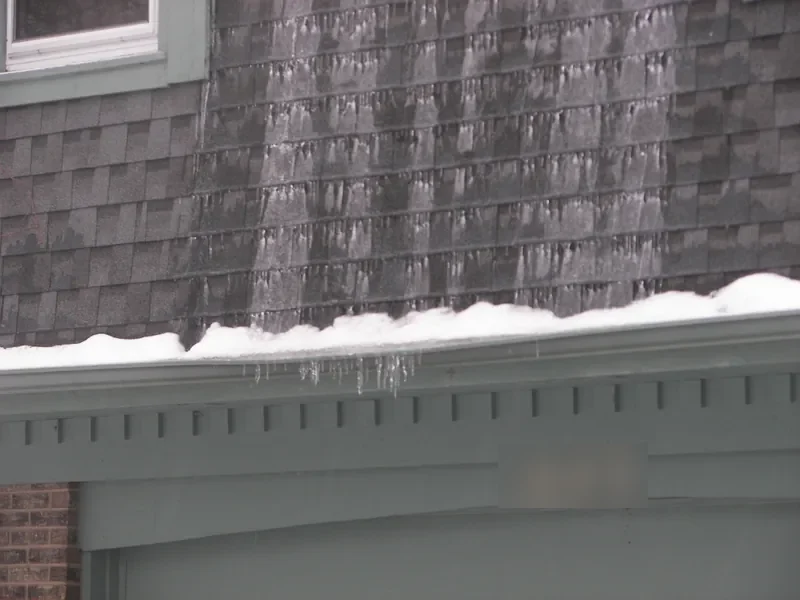
Melt running over the trim and freezing on it.
-
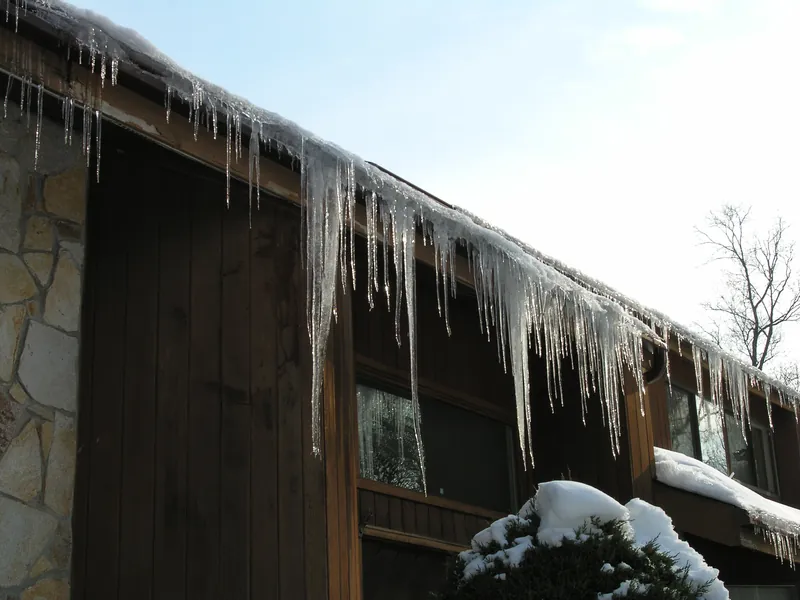
A whole elevation iced over.
-
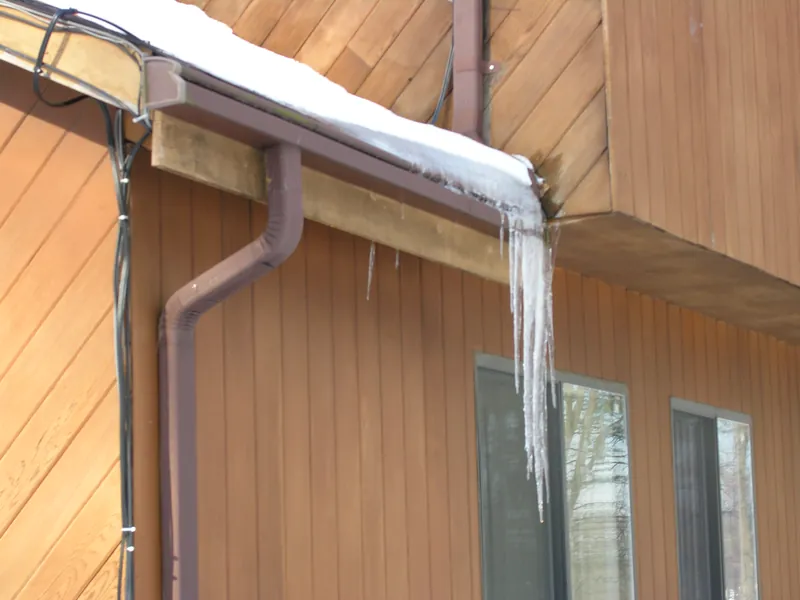
The blockage starts at the down spout elbow.
Gutter guards
Do gutter guards stop ice?
No, and they often bring icicles on sooner. Metal gutter guards conduct the cold, and the ice forms on top of the guard instead of filling the gutter first and spilling over, so you see icicles earlier than you did before the guards went on.
-
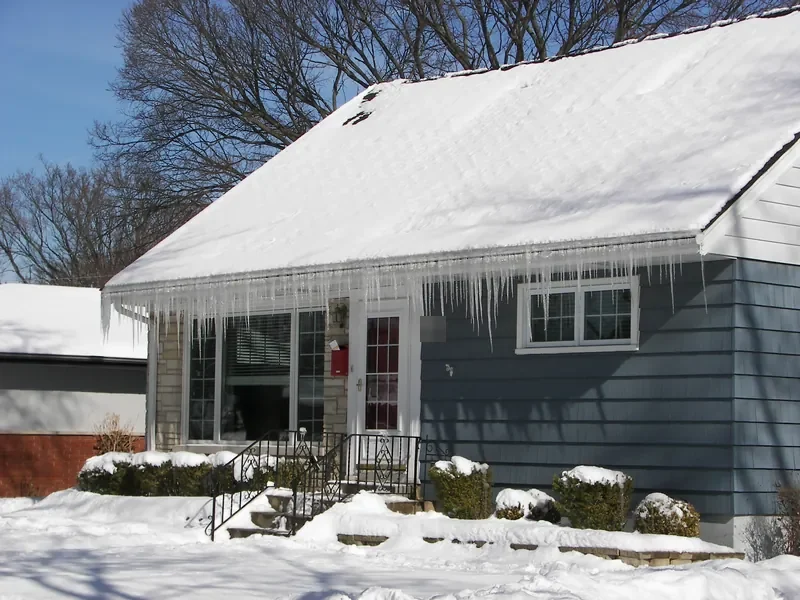
Ice on top of a leaf guard, the whole front of the house.
-
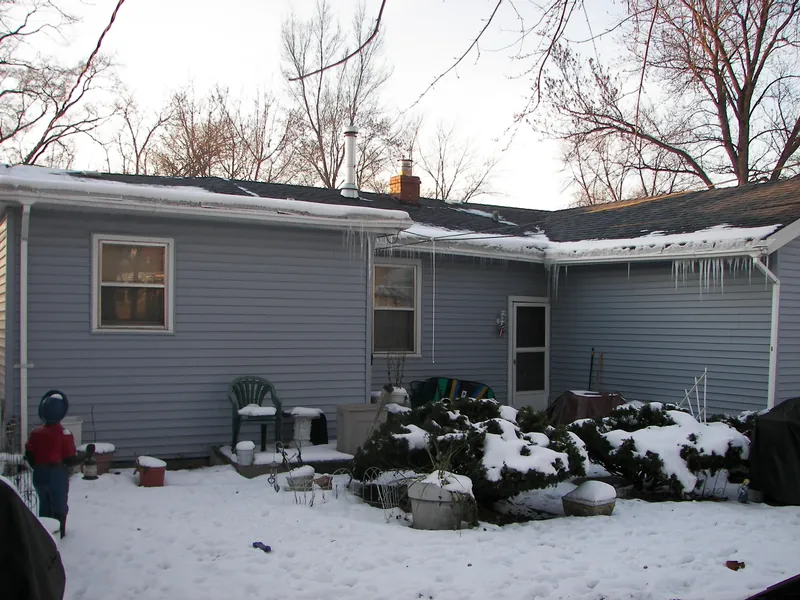
The same thing on a mesh guard at the back.
A fascia-mounted guard is the worst case. Those systems are fitted either directly under the first row of shingles or butted up against it, so the ice forms on top of the guard with the roof right there, and damage to the roof and the fascia commonly follows.
Gutter protection does one useful thing against ice: a guard fastened under the second row of shingles keeps the ice off the first row, which is where ice damming does its worst. It does not stop the ice forming. Some systems claim their design inhibits ice. Unless the system is heated, that claim is false.
Heater Cap installs on most existing aluminum dome gutter cover systems, so the guards already on the house do not have to come off for the ice to be dealt with.
The usual answer
Why does heat tape not solve it?
Because it is dangerous, and because what it does melt is a channel rather than a roof edge.
- Heat tape can spark and cause fires. Many of these products are not temperature regulated. They sit against asphalt shingles, which are an oil derivative and flammable, and against the wood the roof is built from. The insulation covering some of them is thin and easily nicked, which raises the risk further.
- Constant wattage wire never stops heating.
- It melts only a thin channel.
- Nothing protects it from animals.
- The zigzag is visible all year.
- It is a do-it-yourself install.
- Self regulating cable that only gets warm.
- Panels melt whole swathes, not a channel.
- Valleys, down spouts and drain tiles too.
- Treat the problem areas only.
- On its own protected circuit.
- It fits over most existing gutter covers.
- It stays out of sight.
The oldest home in Naperville, IL burned down in the winter of 2006. The thin wire system caught the roof on fire.
Want the longer version? Our free Homeowner's Guide to Heated Gutter Systems covers the three kinds of heated gutter system and how to choose a contractor for one.
Get ahead of the first freeze.
Installers book up fast once the snow starts. Reach out now.